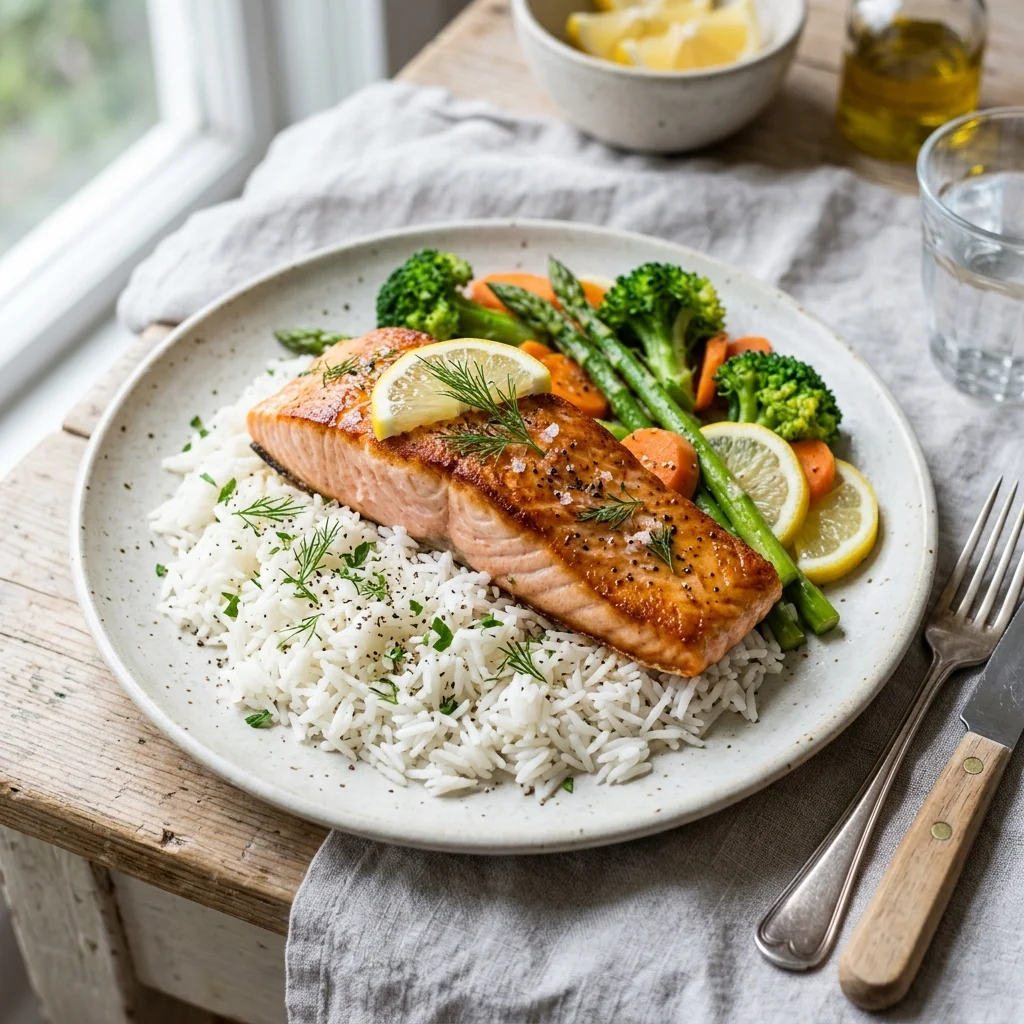
Salmon Bites Recipe
Crispy on the outside, buttery on the inside. These pan-seared salmon bites are the perfect appetizer or quick weeknight protein.
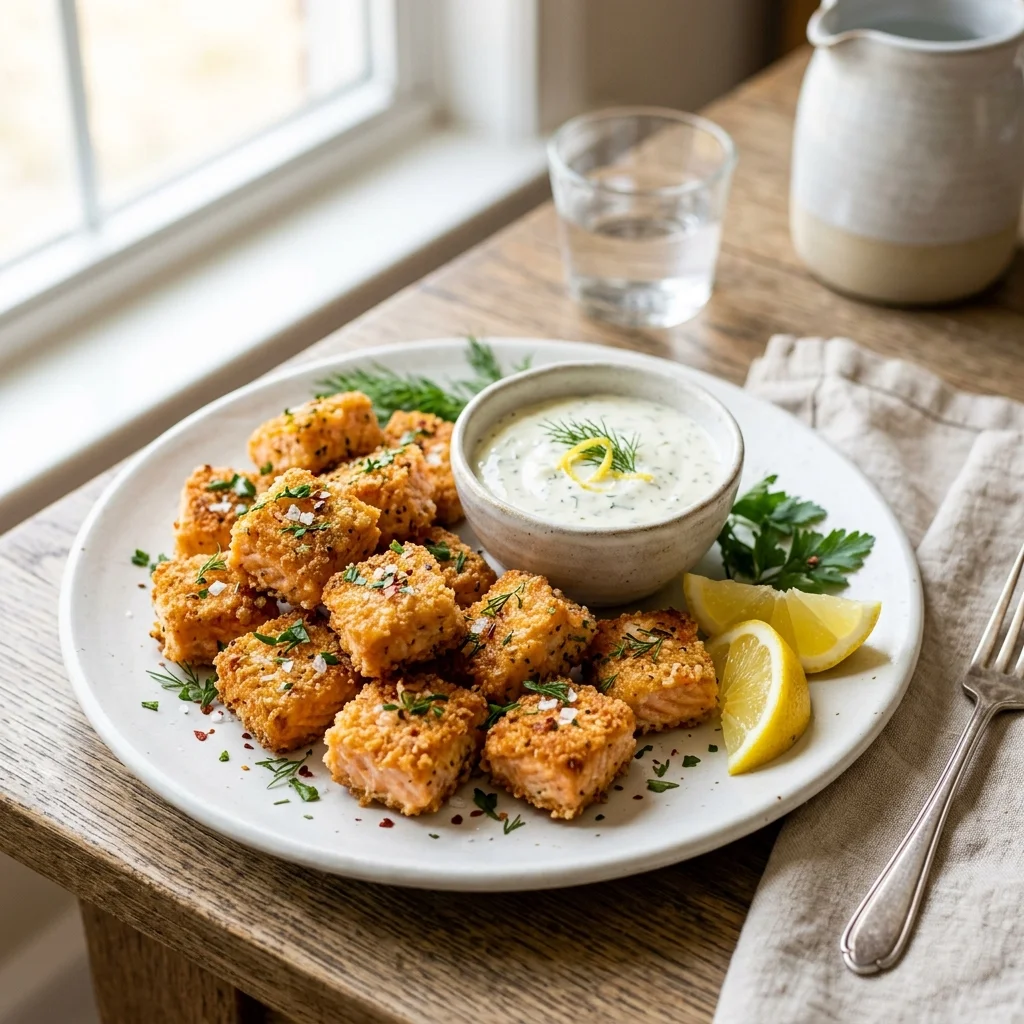
How to make salmon bites
This salmon bites recipe takes 18 minutes from cutting board to plate. Cut 1.5 lbs of salmon into 1-inch cubes, season with garlic powder, paprika, salt, and pepper, then sear in a hot skillet for 2 minutes per side. The result is a crispy exterior with a buttery, barely-set center at 125°F.
The key is heat and restraint. Get the pan hot, put the cubes in, and do not touch them. Moving them around prevents the crust from forming. Two minutes per side is all it takes — you are looking for golden brown on the outside and slightly translucent in the center.
Getting the crust right
Two things ruin the sear on salmon bites: moisture and crowding. Pat every cube dry with paper towels before seasoning. If there is water on the surface, the oil temperature drops the moment the fish hits the pan and you get steaming instead of browning.
Leave at least half an inch of space between each cube in the skillet. If your pan is not big enough for all the pieces at once, cook in two batches. A crowded pan traps steam and the fish turns grey and soft instead of golden and crisp.
The honey-soy dipping sauce
Whisk together 2 tablespoons soy sauce, 1 tablespoon honey, 1 teaspoon sesame oil, and 1/2 teaspoon rice vinegar. That is the entire sauce. It takes 30 seconds to make and balances salty, sweet, and tangy against the rich salmon.
You can make the sauce while the salmon cooks. It keeps in the fridge for up to a week, so doubling the recipe gives you a ready-made sauce for salmon and rice bowls later in the week.
Buying salmon for bites
Use skinless fillets for this recipe. If you can only find skin-on, remove the skin yourself by sliding a sharp knife between the flesh and skin at a shallow angle. It takes 30 seconds per fillet once you have done it a couple of times.
Wild-caught salmon runs $10-$14/lb. Frozen fillets work just as well as fresh — most "fresh" salmon at the supermarket was frozen on the boat anyway. Thaw in the fridge overnight, not on the counter. For a deeper dive into smoking and brining salmon, the smoked salmon recipe covers that technique in detail.
Gear that helps
- Lodge 12-inch cast iron skillet — $25-$40. Holds heat better than anything else at this price. The heavy base gives you an even sear without hot spots.
- Instant-read thermometer — $10-$15. Salmon bites are small and cook fast. The difference between 125°F and 145°F is about 60 seconds, and you cannot tell by looking.
Ways to serve salmon bites
As an appetizer, arrange the bites on a platter with the dipping sauce in a small bowl and lemon wedges scattered around. For a full meal, serve over rice with steamed vegetables for a quick weeknight salmon rice bowl. They also work well tucked into tortillas with slaw and avocado — similar to how I use steak in a steak quesadilla.
Leftover salmon bites reheat in a 350°F oven for 5-6 minutes. The microwave works in a pinch, but the crust softens. They keep in the fridge for up to 3 days in an airtight container.
A note on salmon temperature
The USDA recommends cooking fish to 145°F. I pull salmon at 125°F for texture reasons — the fish is opaque and flakes with gentle pressure at that point. This is a personal preference, not medical advice. If you are cooking for young children, elderly, or immunocompromised individuals, follow the USDA guideline.
The Serious Eats guide to pan-searing salmon covers the science behind salmon protein coagulation at different temperatures. Understanding why the texture changes at specific temperatures helps you find the doneness you prefer.
Salmon Bites Recipe
Ingredients
- 1.5 lbs salmon fillet, skin removed, cut into 1-inch cubes
- 2 tablespoons olive oil
- 1 teaspoon garlic powder
- 1 teaspoon paprika
- 1 teaspoon kosher salt
- 1/2 teaspoon black pepper
- 2 tablespoons butter
- 1 tablespoon lemon juice
- For the dipping sauce:
- 2 tablespoons soy sauce
- 1 tablespoon honey
- 1 teaspoon sesame oil
- 1/2 teaspoon rice vinegar
Instructions
- Cut the salmon into 1-inch cubes, removing any pin bones as you go.
- Toss the cubes in a bowl with olive oil, garlic powder, paprika, kosher salt, and black pepper until evenly coated.
- Heat a cast iron or non-stick skillet over medium-high heat for 2 minutes.
- Add the salmon cubes in a single layer, leaving space between each piece — work in batches if needed.
- Sear for 2 minutes per side without moving the cubes, until a golden crust forms on each face.
- Add butter and lemon juice to the pan during the last 30 seconds, tilting the pan to baste the bites.
- Remove from heat when the internal temperature reaches 125°F — the centers should be slightly translucent.
- While the salmon cooks, whisk together soy sauce, honey, sesame oil, and rice vinegar for the dipping sauce.
- Serve the bites immediately with the dipping sauce and lemon wedges on the side.
Tips
- Cut all pieces to the same 1-inch size so they cook at the same rate. Uneven cubes mean some are overcooked while others are raw.
- Do not crowd the pan. Overcrowding drops the temperature and the salmon steams instead of searing. Two batches are better than one soggy batch.
- Pull at 125°F for buttery centers. Going to 145°F (the USDA recommendation) gives firmer, drier bites. Your preference.
- Pat the salmon cubes dry before seasoning. Surface moisture prevents browning and you will not get that crispy crust.
- Wild-caught salmon at $10-$14/lb works well here. Frozen is fine — thaw overnight in the fridge and pat dry before cutting.
Frequently Asked Questions
How long do you cook salmon bites?
Sear salmon bites for 2 minutes per side in a hot skillet, about 8 minutes total for four sides. The exact time depends on the size of your cubes — 1-inch pieces cook faster than 1.5-inch pieces. Use an instant-read thermometer and pull at 125°F.
What temperature should salmon bites be cooked to?
For a buttery, slightly translucent center, pull at 125°F. The USDA recommends 145°F for fully cooked fish. Both are common. Check with an instant-read thermometer rather than cutting into the fish.
Can you make salmon bites with frozen salmon?
Yes, but thaw the salmon completely in the fridge overnight first. Do not cook salmon bites from frozen — they will not sear properly and the exterior will overcook before the center thaws. Pat the thawed fillets dry before cutting into cubes.
What is the best pan for salmon bites?
A cast iron skillet gives the best sear because it holds heat well and does not drop in temperature when you add cold fish. A non-stick pan works if cast iron is not available, but the crust will not be as crispy. Either way, get the pan hot before adding the salmon.
How do you keep salmon bites from sticking?
Make sure the pan is fully hot before adding the salmon, use enough oil to coat the surface, and do not move the cubes for the first 2 minutes. The crust will release naturally once it forms. If you flip too early, the fish tears.